- Sunday - Friday - 24 Hour
- Saturday - CLOSED
First Signs of Liver Damage from Alcohol
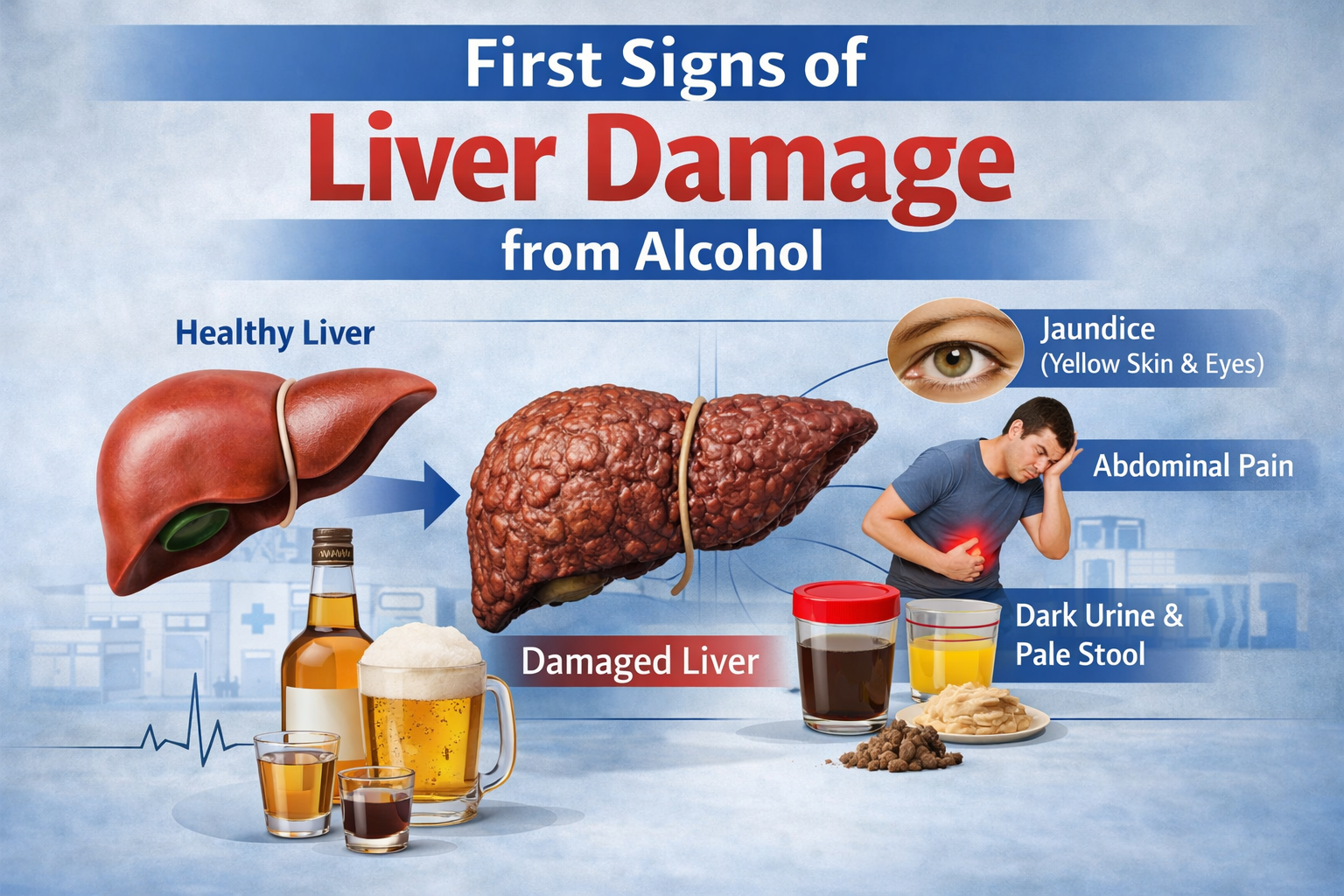
First Signs of Liver Damage from Alcohol
🩺 First Signs of Liver Damage from Alcohol: Early Symptoms You Should Never Ignore
First signs of liver damage from alcohol often appear silently, making early detection difficult. Many people ignore subtle symptoms like fatigue, nausea, or abdominal discomfort until the condition becomes severe. Understanding the early warning signs, causes, and treatment options can help prevent serious complications such as cirrhosis or liver failure.
Alcohol-related liver disease is a growing global concern, affecting millions of people each year. The liver plays a vital role in detoxifying harmful substances, including alcohol. However, excessive or prolonged alcohol consumption can gradually damage this essential organ.
Recognizing the first signs of liver damage from alcohol is crucial. Early detection can prevent severe complications such as cirrhosis, liver failure, and the need for a transplant.
🧠 Understanding How Alcohol Affects the Liver
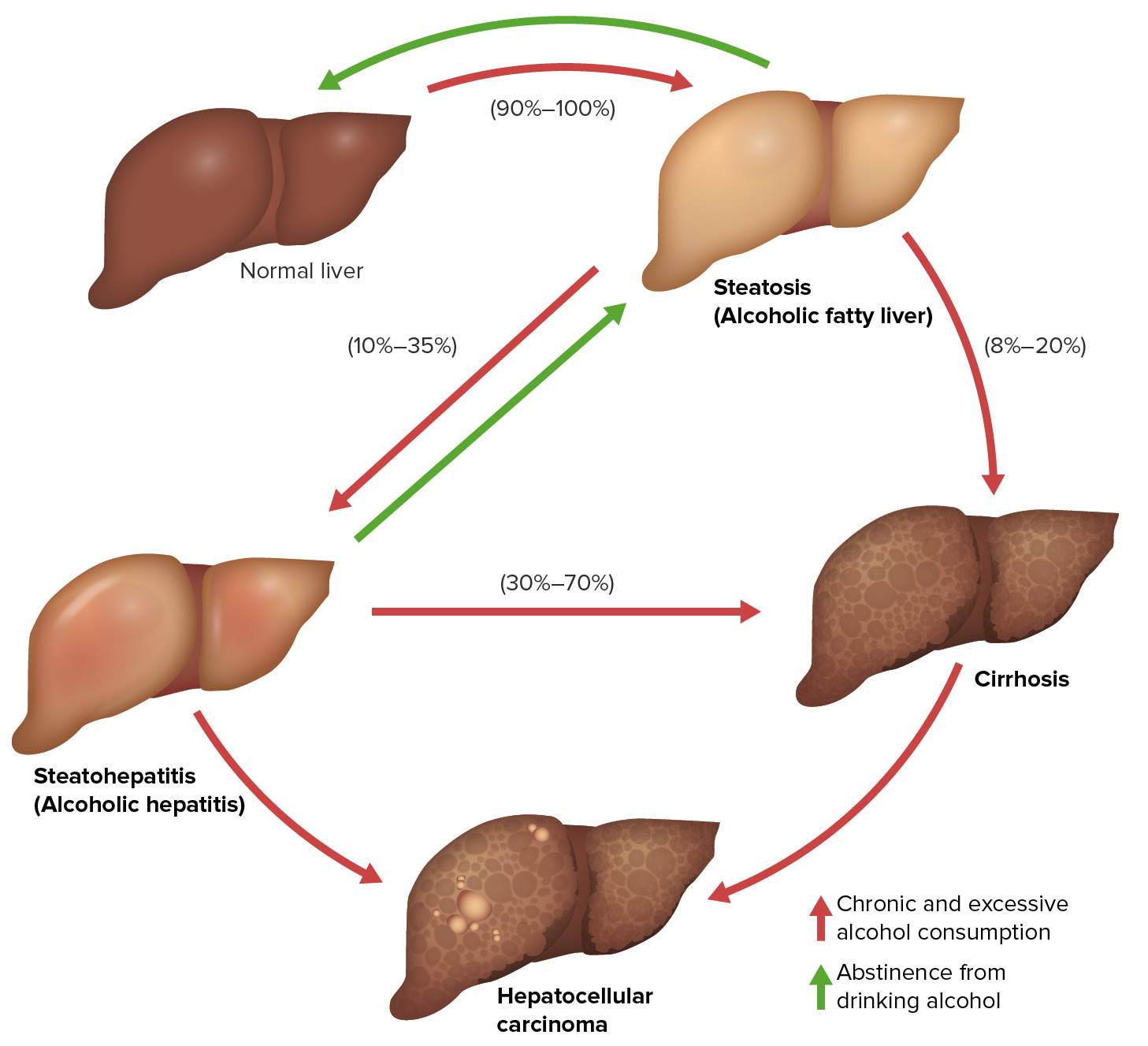
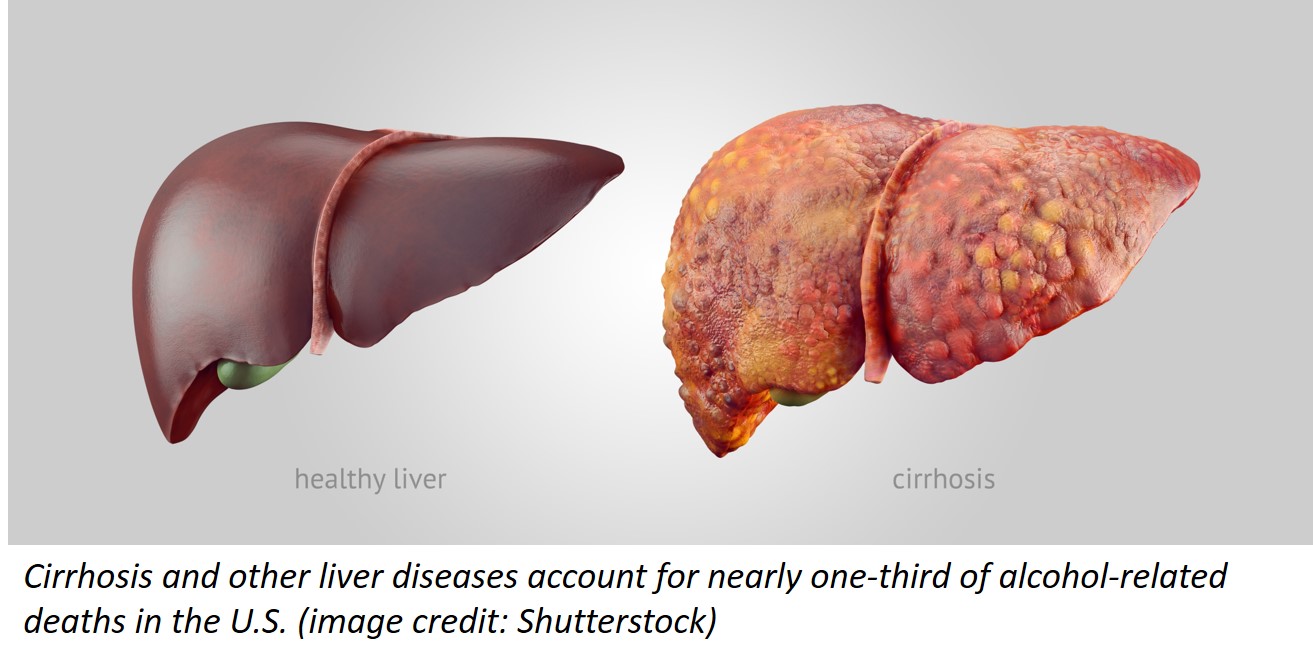
When you consume alcohol, your liver works hard to break it down and remove toxins from your body. Over time, excessive alcohol intake leads to:
- Fat accumulation (fatty liver)
- Inflammation (alcoholic hepatitis)
- Scarring (cirrhosis)
Each stage worsens if alcohol consumption continues.
👉 According to the World Health Organization, alcohol contributes to more than 3 million deaths annually, many linked to liver disease.
⚠️ What Are the First Signs of Liver Damage from Alcohol?
Early liver damage often develops silently, but there are warning signs you should never ignore.
1. Persistent Fatigue and Weakness
One of the earliest symptoms is feeling unusually tired. Your liver’s reduced ability to process toxins can lead to constant fatigue and low energy levels.
2. Loss of Appetite and Nausea
You may notice:
- Reduced hunger
- Feeling full quickly
- Frequent nausea or vomiting
These symptoms occur because the liver struggles to aid digestion properly.
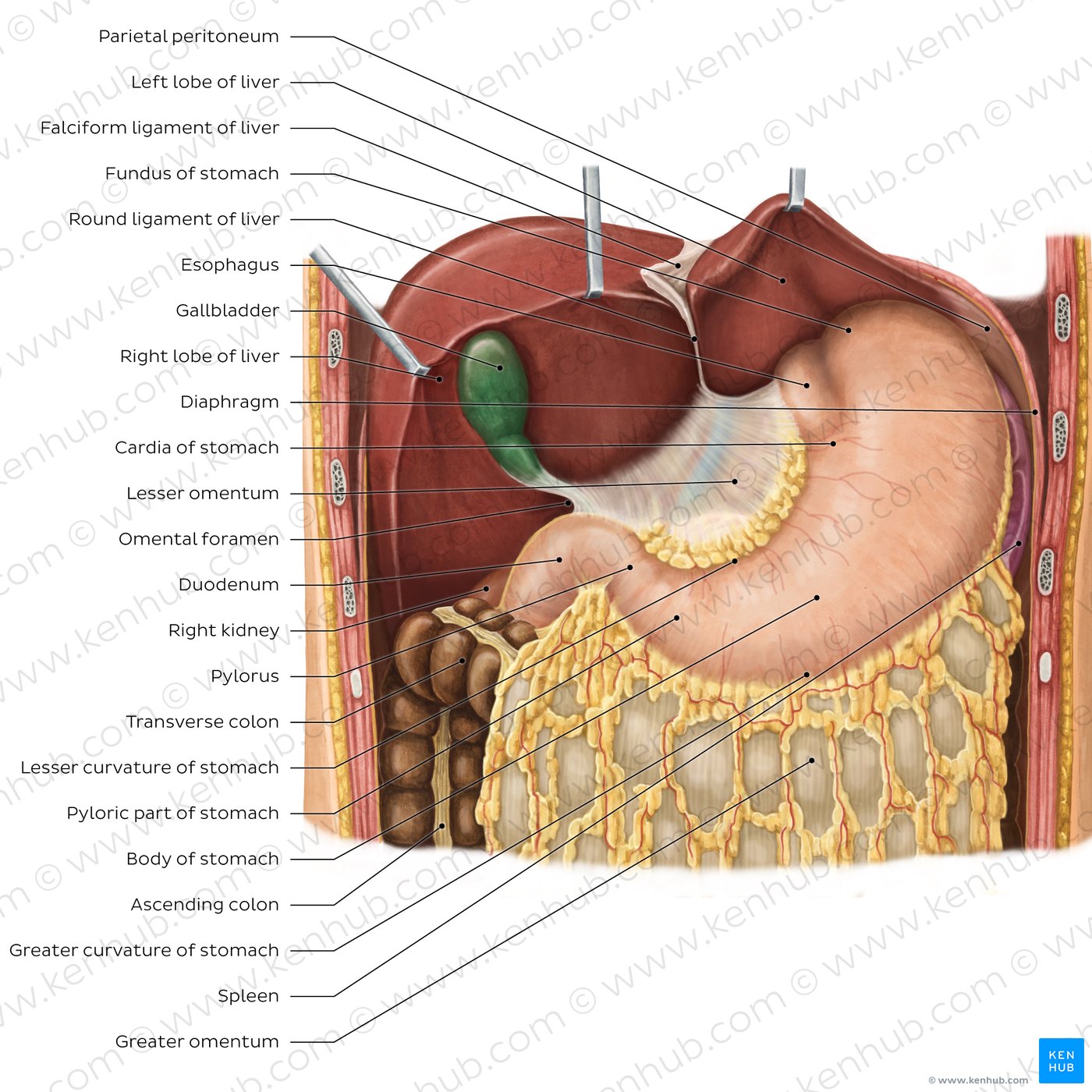
3. Mild Abdominal Pain or Discomfort

4. Unexplained Weight Loss
Sudden weight loss without trying can indicate liver dysfunction. This is often linked to poor metabolism and appetite loss.
5. Yellowing of Skin and Eyes (Jaundice)

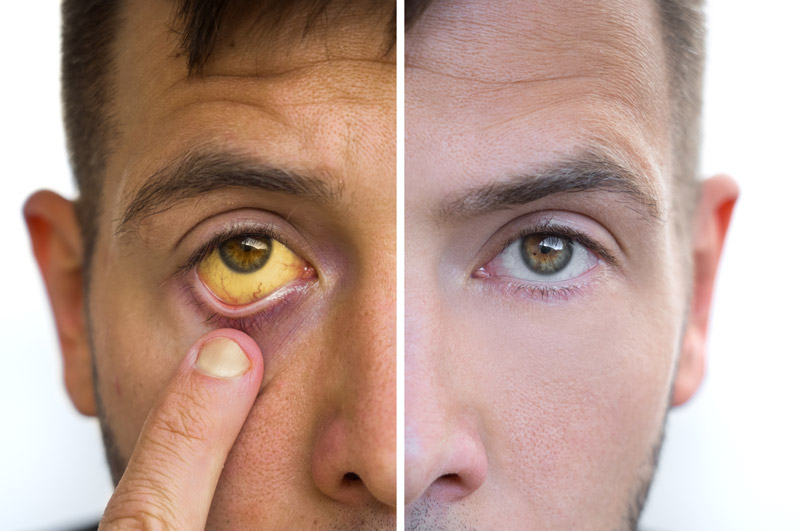

Jaundice is a classic sign of liver damage. It occurs when bilirubin builds up in the blood due to impaired liver function.
6. Swelling in Legs and Abdomen (Edema & Ascites)
Fluid retention can occur as liver function declines, leading to:
- Swollen legs
- Abdominal bloating
7. Dark Urine and Pale Stool
Changes in urine and stool color are early indicators of liver dysfunction.
8. Easy Bruising or Bleeding
A damaged liver cannot produce enough clotting proteins, leading to frequent bruising.
🧬 Stages of Alcohol-Related Liver Disease
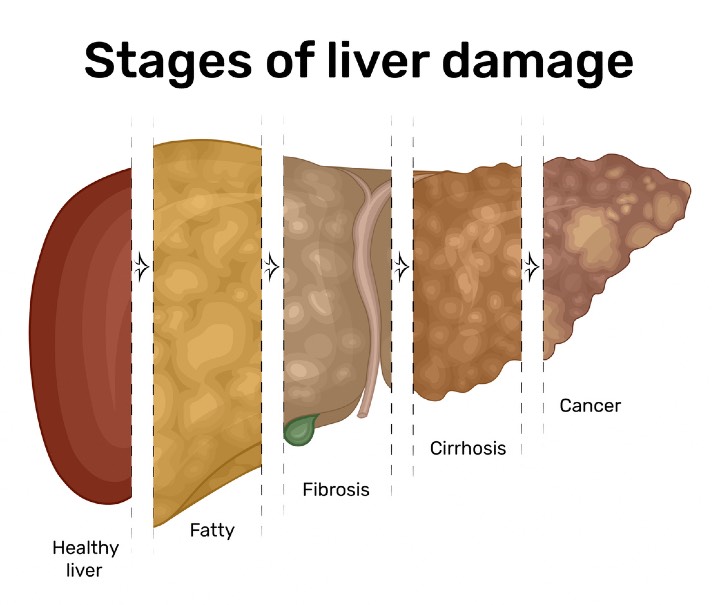

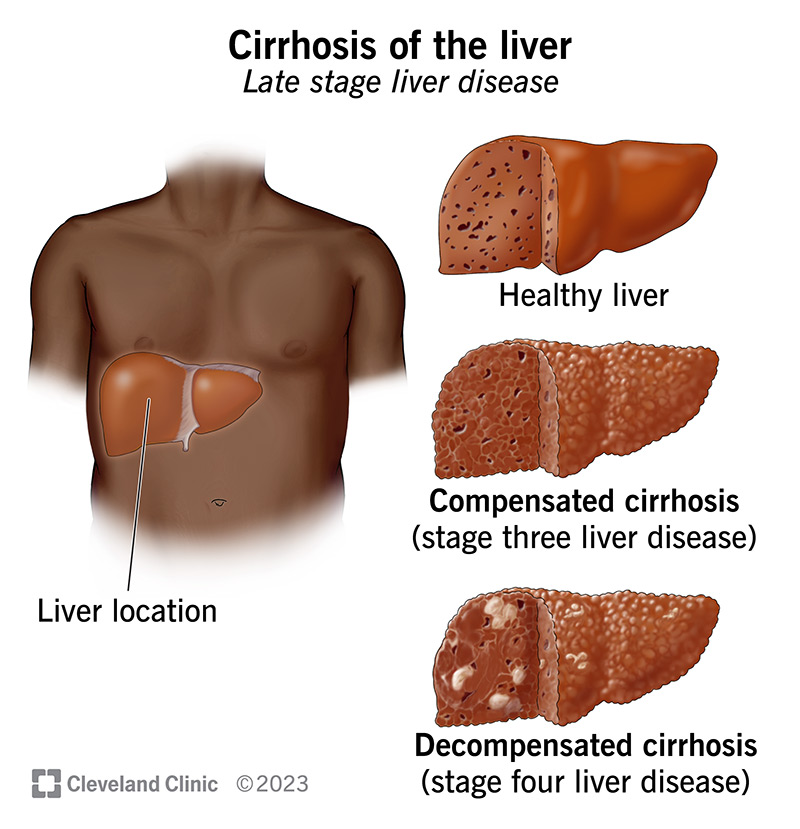

Understanding the stages helps identify where intervention is possible:
1. Fatty Liver (Steatosis)
- Reversible if alcohol is stopped early
- Often no symptoms
2. Alcoholic Hepatitis
- Inflammation of the liver
- Symptoms include fever, pain, and jaundice
3. Cirrhosis
- Permanent scarring
- May lead to liver failure
🔍 When Should You See a Doctor?
You should consult a specialist if you experience:
- Persistent fatigue
- Yellowing of skin or eyes
- Abdominal swelling
- Sudden weight loss
👉 You can learn more about expert care on our internal page:
👉 Liver Transplant Services in Nepal (Internal Link)
For global guidelines, refer to the American Liver Foundation.
🧪 How Is Liver Damage Diagnosed?
Doctors may recommend:
- Blood tests (Liver Function Tests)
- Ultrasound or CT scan
- Liver biopsy (in severe cases)
Early diagnosis significantly improves outcomes.
🛑 Can Alcohol-Related Liver Damage Be Reversed?
Yes—but only in early stages.
Reversible Stage:
- Fatty liver can improve within weeks of stopping alcohol
Partially Reversible:
- Alcoholic hepatitis may improve with treatment
Irreversible:
- Cirrhosis requires long-term management or transplant
🏥 Treatment Options for Advanced Liver Damage
If liver damage becomes severe, options include:
- Medications
- Lifestyle changes
- Liver transplant
👉 Read more: Life After Liver Transplant – Diet & Care Guide (Internal Link)
A transplant may be the only life-saving option in advanced cases.
🥗 Lifestyle Changes to Protect Your Liver


Key Steps:
- Stop alcohol completely
- Maintain a balanced diet
- Exercise regularly
- Stay hydrated
- Avoid unnecessary medications
🌍 External Resources for Further Reading
- World Health Organization – Alcohol and health
- American Liver Foundation – Liver disease education
These trusted organizations provide up-to-date medical guidance.
❗ Why Early Detection Matters
Ignoring early symptoms can lead to:
- Liver failure
- Internal bleeding
- Cancer
- Death
However, identifying the first signs of liver damage from alcohol early gives you a chance to reverse the damage and live a healthy life.
📝 Final Thoughts
Your liver is resilient—but not invincible. Alcohol-related damage often begins silently, making awareness critical.
If you or a loved one experiences early symptoms like fatigue, jaundice, or abdominal pain, don’t ignore them. Seek medical help immediately.
Early action can prevent lifelong complications and even save lives.