
- Sunday - Friday - 24 Hour
- Saturday - CLOSED
Liver Transplant Success Rate in 2026 | Dr. Akanand Singh
Liver Transplant Success Rate in 2026 | Dr. Akanand Singh
Liver Transplant Success Rate: What Patients Need to Know in 2026
The liver transplant success rate has improved significantly in 2026 due to advances in surgical techniques, immunosuppressive medications, and comprehensive post-transplant care. Understanding the liver transplant success rate, recovery process, and factors that influence long-term outcomes can help patients and their families make informed decisions about treatment.
If you or a loved one has been advised to consider a liver transplant, understanding the success rate, recovery process, and factors that influence long-term outcomes can help you make informed decisions.
What Is a Liver Transplant?
A liver transplant is a surgical procedure in which a diseased or failing liver is replaced with a healthy liver from either:
- A deceased donor
- A living donor who donates a portion of their liver
Patients with advanced cirrhosis may eventually require a liver transplant. Learn more about our Liver Cirrhosis Treatment to understand the stages of liver disease and available treatment options.
Because the liver has a remarkable ability to regenerate, both the donated portion and the remaining liver in the donor can grow back to near-normal size over time.
Liver Transplant Success Rate in 2026
A liver transplant is usually recommended when the liver is permanently damaged and can no longer perform its essential functions.
Common conditions include:
- Liver cirrhosis
- Chronic Hepatitis B or Hepatitis C
- Fatty liver disease (NASH/NAFLD)
- Alcohol-related liver disease
- Acute liver failure
- Autoimmune liver disease
- Biliary atresia
- Certain liver cancers (such as hepatocellular carcinoma)
What Is the Liver Transplant Success Rate?
Modern liver transplantation has achieved excellent outcomes across the world.
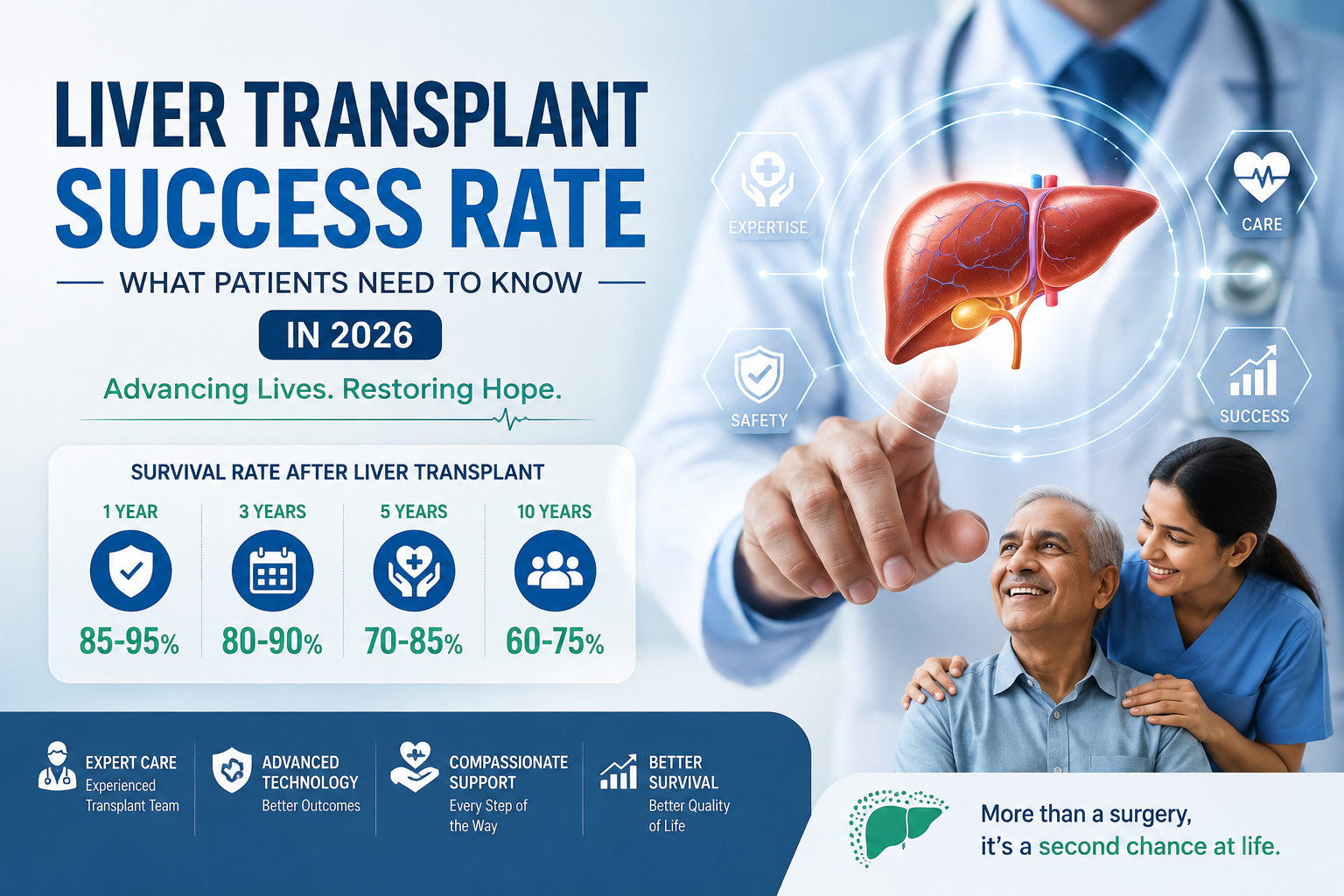
Average Survival Rates
| Time After Surgery | Survival Rate |
|---|---|
| 1 Year | 85–95% |
| 3 Years | 80–90% |
| 5 Years | 70–85% |
| 10 Years | 60–75% |
Many patients live 20 years or longer after a successful liver transplant with proper medical care and healthy lifestyle choices.
According to the American Association for the Study of Liver Diseases (AASLD), liver transplantation remains the most effective treatment for eligible patients with end-stage liver disease.
Note: Individual outcomes vary depending on the patient’s overall health, underlying liver disease, donor quality, and post-transplant care.
Living Donor vs Deceased Donor Success Rate
Both types of liver transplantation have excellent outcomes.
Living Donor Liver Transplant
Advantages
- Shorter waiting time
- Surgery performed before severe deterioration
- Reduced waiting list mortality
- Better planning and preparation
- Excellent long-term outcomes
Deceased Donor Liver Transplant
Advantages
- No risk to a living donor
- Widely performed worldwide
- Excellent survival with proper recipient selection
In experienced transplant centers, both procedures achieve very high success rates.
Factors That Affect Liver Transplant Success Rate
Several factors influence transplant outcomes.
1. Patient’s Overall Health
Patients with fewer medical complications generally recover faster.
2. Age
Age alone is not a barrier. Many older adults have successful liver transplants when carefully evaluated.
3. Stage of Liver Disease
Earlier transplantation before severe complications often leads to better outcomes.
4. Donor Liver Quality
Healthy donor organs improve long-term success.
5. Surgical Expertise
Experienced transplant surgeons and multidisciplinary teams contribute significantly to successful outcomes.
6. Medication Adherence
Taking prescribed immunosuppressive medicines exactly as directed is essential to prevent organ rejection.
7. Lifestyle After Surgery
Maintaining a healthy lifestyle greatly improves long-term survival.
How to Improve Liver Transplant Success Rate
Recovery begins immediately after surgery.
Hospital Stay
Most patients remain in the hospital for approximately 1–3 weeks, depending on their recovery.
Initial Recovery
During the first few weeks, patients are closely monitored for:
- Liver function
- Signs of infection
- Organ rejection
- Medication adjustment
- Nutritional status
Returning Home
Patients continue regular follow-up visits and blood tests to ensure the transplanted liver is functioning well.
Can the Body Reject a New Liver?
Yes, organ rejection is possible, but it is usually manageable when detected early.
Signs may include:
- Fever
- Fatigue
- Yellowing of the eyes or skin
- Dark urine
- Abdominal pain
- Elevated liver function tests
Routine follow-up appointments help detect rejection early so treatment can be started promptly.
Liver Transplant Success Rate: Recovery Timeline
Patients play an important role in protecting their transplanted liver.
Take Medications Correctly
Never skip immunosuppressive medicines.
Eat a Balanced Diet
Focus on:
- Lean proteins
- Fresh fruits
- Vegetables
- Whole grains
- Healthy fats
Limit:
- Excess salt
- Sugary foods
- Processed foods
Avoid Alcohol
Alcohol can seriously damage the transplanted liver and should be avoided unless specifically advised otherwise by your transplant team.
Exercise Regularly
Walking and light physical activity improve recovery and overall health.
Prevent Infections
- Wash hands frequently
- Stay up to date with recommended vaccinations (as advised by your healthcare provider)
- Avoid close contact with people who are ill
Attend Follow-Up Visits
Regular monitoring helps identify complications early.
Hospital Recovery After Liver Transplant
Many people return to:
- Work
- Travel
- Family life
- Exercise
- Social activities
With proper care, many transplant recipients enjoy an excellent quality of life for many years.
Liver Transplant Success Rate FAQs
Is liver transplant a permanent cure?
A transplant replaces the diseased liver, but lifelong follow-up and medications are necessary to protect the new liver.
How long can someone live after a liver transplant?
Many patients live for decades after transplantation, especially when they follow medical advice and maintain a healthy lifestyle.
Is liver transplant a high-risk surgery?
It is a major operation, but advances in surgical techniques, anesthesia, and postoperative care have made it significantly safer, with high success rates at experienced transplant centers.
Can a liver grow back after donation?
Yes. The liver has a unique ability to regenerate. In living donor transplantation, both the donor’s remaining liver and the transplanted portion usually regenerate over time.
Can I live a normal life after a liver transplant?
Yes. Many patients return to normal daily activities, including work, travel, and exercise, after recovery.
When Should You Consult a Liver Transplant Specialist?
You should seek evaluation if you have:
- Advanced liver cirrhosis
- Recurrent fluid accumulation (ascites)
- Frequent confusion due to liver disease (hepatic encephalopathy)
- Repeated gastrointestinal bleeding
- Liver cancer meeting transplant criteria
- Severe liver failure symptoms despite treatment
Early evaluation allows more treatment options and can improve outcomes.
Conclusion: Liver Transplant Success Rate in 2026
The liver transplant success rate in 2026 is higher than ever, thanks to advances in surgical techniques, improved donor matching, modern immunosuppressive therapies, and comprehensive post-transplant care. Most patients experience excellent survival and a significantly improved quality of life when they receive timely treatment and adhere to follow-up care.
If you or a loved one has advanced liver disease, consulting an experienced liver transplant specialist can help determine the most appropriate treatment plan and improve the chances of a successful outcome.